Clay Dryer
The Best Choices for Your Project
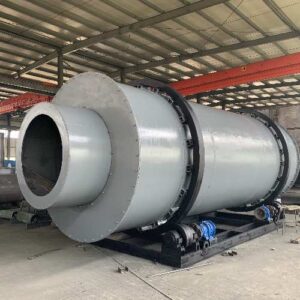
Clay dryer, also known as three-pass dryer, is a drying equipment used in building materials, chemical industry, casting and other industries. This equipment can process materials such as clay, sludge, slag with a moisture content of 3-50%.
- Production capacity: 1-20T/H.
- Customizable diameter from 80cm to 3600cm.
- Dryer length: 8 meters to 36 meters.
Clay dryer
A clay dryer is a specialized drying machine designed for high-viscosity materials. Clay generally has a high moisture content, often exceeding 30%. A clay dryer can reduce this moisture to 5%-8%, or even as low as 2%.
Clay dryers are widely used in industries such as ceramics, construction materials, cement, and refractory materials.
Clay dryers can be configured as either three-pass dryers or rotary drum dryers. The working principle of both types is the same, though their structures differ. Both use hot air and the rotation of the drum to allow the material to constantly contact the heat source, facilitating heat transfer and mass transfer to reduce moisture. The clay moves forward inside the drum due to the tilt angle and rotational force, fully contacting the hot air to achieve drying.
Three-pass dryer: Consists of three concentric cylinders through which the material flows sequentially. The material travels a longer distance, allowing higher thermal efficiency. Drying efficiency can be 40% higher than a single drum dryer, and it occupies less space, making it suitable for clay with moisture content above 30%.
Single drum dryer: Composed of a single cylinder, simple in design and occupies slightly more space. It is suitable for clay with lower moisture content.
| Model | Max Diameter (m) | Effective Length (m) | Capacity (t/h) | Sand | Fly Ash | Slag | Speed (r/min) | Power (kW) |
|---|---|---|---|---|---|---|---|---|
| S6203 | 1.6 | 1.8 | 2-3 | 1-2 | 2-3 | 3-10 | 3 | 3 |
| S6205 | 2.0 | 2.0 | 4-5 | 2-3 | 4-5 | 3-10 | 4 | 4 |
| S6210 | 2.2 | 2.5 | 8-10 | 4-5 | 8-10 | 3-10 | 5.5 | 5.5 |
| S6215 | 2.5 | 2.8 | 12-15 | 6-8 | 12-15 | 3-10 | 11 | 11 |
| Ф2×3 | 2.0 | 3.0 | 8-12 | 4-6 | 8-12 | 3-10 | 3×2 | 3×2 |
| Ф2×5 | 2.0 | 5.0 | 12-15 | 6-8 | 12-15 | 3-10 | 5.5×2 | 5.5×2 |
| Ф2.2×4.5 | 2.2 | 4.5 | 15-18 | 8-10 | 15-18 | 3-10 | 5.5×2 | 5.5×2 |
| Ф2.5×5 | 2.5 | 5.0 | 20-25 | 10-13 | 20-25 | 3-10 | 4×4 | 4×4 |
| Ф2.5×6 | 2.5 | 6.0 | 25-30 | 13-15 | 25-30 | 3-10 | 5.5×4 | 5.5×4 |
| Ф2.8×6 | 2.8 | 6.0 | 30-35 | 15-18 | 30-35 | 3-10 | 7.5×4 | 7.5×4 |
| Ф3×6 | 3.0 | 6.0 | 35-40 | 18-20 | 35-40 | 3-10 | 7.5×4 | 7.5×4 |
| Ф3×7 | 3.0 | 7.0 | 40-45 | 20-23 | 40-45 | 3-10 | 11×4 | 11×4 |
| Ф3.2×7 | 3.2 | 7.0 | 45-50 | 23-25 | 45-50 | 3-10 | 11×4 | 11×4 |
| Ф3.2×8 | 3.2 | 8.0 | 50-55 | 25-28 | 50-55 | 3-10 | 11×4 | 11×4 |
| Ф3.6×8 | 3.6 | 8.0 | 55-60 | 28-30 | 55-60 | 3-10 | 15×4 | 15×4 |
| Ф3.8×9 | 3.8 | 9.0 | 60-70 | 30-35 | 60-70 | 3-10 | 15×4 | 15×4 |
| Ф4.0×10 | 4.0 | 10.0 | 70-100 | 35-50 | 70-100 | 3-10 | 18.5×4 | 18.5×4 |
| Ф4.2×8.5 | 4.2 | 8.5 | 80-100 | 40-50 | 80-100 | 3-10 | 18.5×4 | 18.5×4 |
Main Steps of the Clay Drying Process
The material is evenly fed into the dryer via a conveyor, while the heat source simultaneously supplies hot air.
The dryer rotates, and the lifting plates inside stir the clay to ensure even heating. A dust collector continuously removes water vapor and dust.
The dried clay exits via the discharge system. Drying time varies depending on the clay’s moisture content; three-pass dryers generally require less time than single drum dryers.
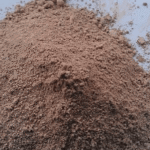
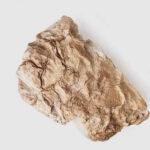
Clay Pictures


Why Clay Needs to Be Dried
Clay typically has a high moisture content (20%-40%). Wet clay is difficult to store or transport because it is highly sticky, prone to clumping, and adheres to equipment, making crushing, grinding, or shaping difficult. Drying makes clay loose, easy to crush, screen, and mold.

Clay is widely used in industries like brick and tile production, ceramics, and cement. For these applications, clay must be dried beforehand. Wet clay is too soft to hold its shape in molding processes and can collapse. Even if molded, rapid water evaporation during firing can create high steam pressure, causing cracks or explosions in the product. Drying ensures stable forming and successful firing.
Drying clay improves subsequent process performance. In ceramics and refractory materials, high moisture can cause cracks or pores during firing. Dried clay is easier to grind and mix uniformly, enhancing product quality.
How a Clay Dryer Works
lay dryers dry clay primarily through heat application and drum rotation, allowing the clay to fully contact the hot air for efficient heat exchange and moisture evaporation. The main steps are:

Clay is first crushed and mixed to ensure uniformity, then transported into the dryer via a conveyor. Conveyor widths can be adjusted based on production capacity, commonly 800mm, 1200mm, or 1500mm.
Hot air heating: A furnace continuously heats the interior of the dryer. Hot air flows along the drum, enveloping wet clay particles, quickly evaporating surface moisture. Hot air temperature can be automatically controlled, typically around 700–850°C.
Lifting plates inside the drum play a major role by scooping the clay from the bottom as the drum rotates, greatly increasing contact surface area with the hot air, enhancing heat exchange efficiency. Some plates also help convey the clay forward.
Why Choose Us as Your Clay Dryer Supplier
We offer significant advantages in clay dryer manufacturing:
Customized drying solutions: Clients only need to provide the clay’s initial moisture content, desired final moisture content, hourly production capacity, and preferred heat source. We quickly provide tailored plans and on-site layouts with drawings.
Extensive experience: With over 20 years of production history, our clay dryers use three-pass or multi-pass designs, improving thermal efficiency by more than 40% compared to traditional single drum dryers.
Energy saving: Our dryers utilize hot air circulation and waste heat recovery systems to reduce fuel or electricity consumption. Computer-controlled systems can automatically adjust temperature and drum speed according to clay moisture content, improving energy efficiencyVersatility and durability: Our dryers handle clay of varying moisture content and particle size, including high-viscosity clay. Drum and lifting plates are made of wear-resistant materials for long service life.Environmentally friendly: Equipped with dust collectors to reduce emissions.
Easy operation and automation: Fully PLC-controlled, one-button operation, real-time monitoring of the drying process.
Get the best solution now!
WRITE TO US
Request A Free Quote
Send us a message if you have any questions or request a quote. Our experts will give you a reply within 24 hours and help you select the right activated carbon you want.
- [email protected]
- (86) 15036188923