Sand dryer

The Best Choices for Your Project

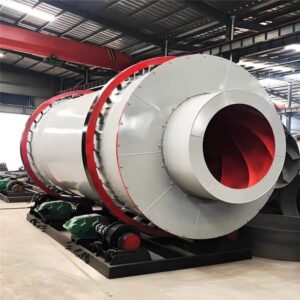
Sand dryer can dry river sand, clay sand, artificial sand, sea sand, etc.

Sand Dryer

A sand dryer consists of three rotary drums, assembled together based on a large single drum dryer. The three drums have different diameters, and the rotation is driven by a set of motors controlled by a frequency converter to synchronize their operation. Therefore, sand dryers are also referred to as three-pass dryers or rotary dryers.

Sand dryers are primarily used in industries such as casting, mining, and chemicals. The raw materials that a sand dryer can dry include yellow sand, river sand, fly ash, slag, clay, wood chips, and other granular materials. Sand dryers are also known as river sand dryers or clay dryers.
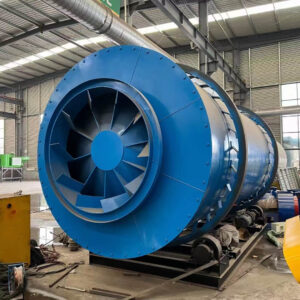
The working principle of a sand dryer involves delivering hot air into the machine and allowing it to interact with the sand. Through the constant rotation of the dryer, the sand is lifted by the lifting plates inside the drum, ensuring it makes full and uniform contact with the hot air, thus drying the sand effectively.

Detailed Working Process:

Step 1: The wet sand is transported into the dryer via a conveyor.

Step 2: Once inside, the heat source is activated, and hot air continuously flows into the drum, interacting with the sand to remove moisture.

Step 3: After entering the drum, the sand comes into contact with the hot air (e.g., hot air, steam, or heated gas), causing the moisture on the sand’s surface to evaporate as steam.

Step 4: The evaporated moisture is expelled from the system at the tail of the dryer, while the dry sand exits the machine through the discharge port into the finished material warehouse. The moist exhaust gases are directed into a dust removal system (e.g., a bag filter) to ensure dust-free production.

The drying process can be controlled via a PLC system, which helps maintain uniform drying temperatures throughout, enabling precise control of both temperature and humidity. This helps avoid issues such as uneven drying or incomplete drying in specific areas.

ModelMax Diameter (m)Effective Length (m)Capacity (t/h)SandFly AshSlagSpeed (r/min)Power (kW)
S62031.61.82-31-22-33-1033
S62052.02.04-52-34-53-1044
S62102.22.58-104-58-103-105.55.5
S62152.52.812-156-812-153-101111
Ф2×32.03.08-124-68-123-103×23×2
Ф2×52.05.012-156-812-153-105.5×25.5×2
Ф2.2×4.52.24.515-188-1015-183-105.5×25.5×2
Ф2.5×52.55.020-2510-1320-253-104×44×4
Ф2.5×62.56.025-3013-1525-303-105.5×45.5×4
Ф2.8×62.86.030-3515-1830-353-107.5×47.5×4
Ф3×63.06.035-4018-2035-403-107.5×47.5×4
Ф3×73.07.040-4520-2340-453-1011×411×4
Ф3.2×73.27.045-5023-2545-503-1011×411×4
Ф3.2×83.28.050-5525-2850-553-1011×411×4
Ф3.6×83.68.055-6028-3055-603-1015×415×4
Ф3.8×93.89.060-7030-3560-703-1015×415×4
Ф4.0×104.010.070-10035-5070-1003-1018.5×418.5×4
Ф4.2×8.54.28.580-10040-5080-1003-1018.5×418.5×4

Differences Between Three-Pass Dryers and Single-Tube Dryers

Three-pass dryers have a design consisting of three concentric drums, which create an air gap between the inner and outer drums. This air gap significantly reduces heat loss, allowing for efficient heating of the material.

In contrast, a single-tube dryer consists of only one rotating drum, where the sand and hot air interact to remove moisture. While the structure is simpler, its heat efficiency is lower compared to a three-pass dryer.

Comparison Between Three-Pass and Single-Tube Dryers:

Feature

Three-Pass Dryer

Single-Tube Dryer

Structure

Three concentric drums with an air gap

Single rotating drum

Heat Efficiency

High heat efficiency, recycles excess heat

Lower heat efficiency, less heat utilization

Drying Effect

Excellent drying effect, suitable for high moisture and high-viscosity materials

Average drying effect, suitable for low-moisture materials

Space Requirement

Requires larger installation space

Requires less space, suitable for limited space

Suitability

Suitable for high-moisture, high-viscosity materials needing efficient heating

Suitable for low-moisture, small-scale operations

Energy Consumption

Low energy consumption, efficient heat utilization

Higher energy consumption, more heat waste

Maintenance

More complex maintenance, requires regular cleaning

Simpler maintenance but may wear out over time

Initial Investment

Higher initial investment, but offers higher long-term benefits

Lower initial investment, higher operational costs


How to Choose the Right Sand Dryer

Determine the Raw Material and Its Moisture Content:
Different sands (e.g., manufactured sand, river sand, quartz sand, or foundry sand) have varying moisture levels, which affect the drying process.
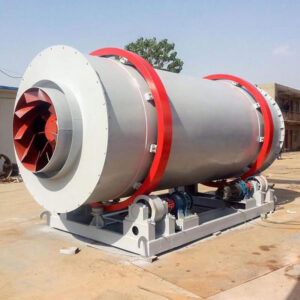
High moisture sand (above 15%): If the sand has high moisture content, a larger, more efficient dryer is needed. A three-pass dryer is often the best choice in this case.
Moderate moisture sand (10-15%): For medium-moisture sands, a regular rotary dryer can be used, and temperature and air flow adjustments can help optimize the drying process.
Low moisture sand (5-10%): A simple dryer is sufficient for low-moisture sands, and a smaller dryer model is recommended.

Determine the Required Drying Standard and Moisture Content After Drying:
The moisture content you want to achieve after drying and whether the sand is coarse, medium, or fine will influence the choice of equipment.

Heat Source Selection:
Different regions and countries may use different heat sources, which can greatly impact the dryer’s performance and energy consumption:

Coal: Coal is a traditional heat source, affordable, but with strict environmental regulations. It’s more common in developing countries.
Natural Gas: A more efficient and cleaner energy source, widely used in developed countries. It is suitable for large-scale production.
Electricity: Typically used for smaller dryers, but electricity tends to be more expensive.
Steam: Used for applications requiring high temperatures and uniformity.

Automation Control Level:
Temperature control is crucial during the drying process. Our sand dryers feature precise temperature control and automatic adjustments, allowing the dryer to adjust based on the sand’s moisture content, optimizing the drying time and reducing manual intervention.
Choose the Right Model:
The three-pass dryer is the go-to option for sand drying. It offers better heat efficiency (saving over 50% energy), occupies less space (only 1/3 the length of a single drum dryer), provides better insulation, and dries the material more uniformly. Unless the budget is extremely limited, a three-pass design is the recommended choice.

Steel plates used in the three-pass dryer should be sufficiently thick (usually ≥16mm), and the lifting plates should be made of high wear-resistant materials.

Additional components include a hot air furnace, feeding and discharging systems, and a dust removal system (such as a high-efficiency bag filter).

Site Space Considerations:
The available space at the customer’s site will influence whether a three-pass dryer or a single-tube dryer is more suitable.
Auxiliary Equipment for Iron Ore Dryers

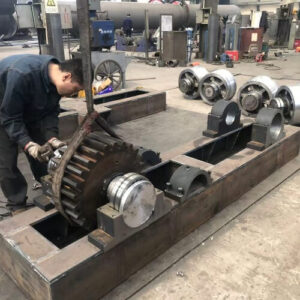
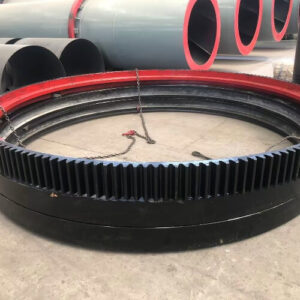
Sand Dryer Gear

Sand Dryer Hot Air Furnace

Sand Dryer Drive Roller

Get the best solution now!

WRITE TO US

Request A Free Quote

Send us a message if you have any questions or request a quote. Our experts will give you a reply within 24 hours and help you select the right activated carbon you want.

Support 24/7

滚动至顶部

Get A Free Consultation And Quote