
slag dryer
The Best Choices for Your Project
Slag dryer is mainly used to dry by-products of metallurgy, casting and mining.
- Production capacity: 1-20T/H.
- Customizable diameter from 80cm to 3600cm.
- Dryer length: 8 meters to 36 meters.
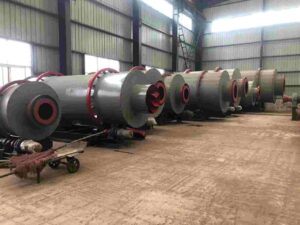
slag dryer
A slag dryer is a rotary drum drying machine, specifically designed for processing high-moisture materials such as slag, carbide slag, limestone, clay, and river sand.
The slag dryer mainly consists of:
Feeding device
Dryer drum
Discharge system
Dust collector
Reducer
Sealing device
Slag is a by-product generated in the metallurgy, steel, and foundry industries. By using a slag dryer, the moisture in slag can be effectively removed, which improves the utilization rate of industrial waste residues.
The working principle is simple: a combustion furnace provides hot air, which is sent into the dryer drum. As slag is lifted and tumbled inside the rotating drum, the hot air evaporates the moisture and carries it away.
As a professional slag dryer manufacturer, our machines are equipped with adjustable parameters such as temperature, drying time, and airflow volume, allowing them to adapt to different material drying requirements.
Two Drying Modes
- Concurrent (Cocurrent) Drying:
- Hot air and materials move in the same direction. Suitable for materials with high initial moisture and heat sensitivity. The hot air first encounters cold, wet material, preventing overheating or coking.
- Counter-current Drying:
- Hot air and materials move in opposite directions. This provides more thorough drying and higher thermal efficiency. It is suitable for heat-resistant materials with strict final moisture requirements.
| Model (mm) | Inclination (%) | Rotating Speed (r/min) | Inlet Temperature (℃) | Power (kW) | Volume (m³) | Capacity (t/h) | Weight (t) |
|---|---|---|---|---|---|---|---|
| Φ600×6000 | 3–5 | 3–8 | ≤700 | 3 | 1.69 | 0.5–1.5 | 2.9 |
| Φ800×8000 | 3–5 | 3–8 | ≤700 | 4 | 4.01 | 0.8–2.0 | 3.5 |
| Φ800×10000 | 3–5 | 3–8 | ≤700 | 4 | 5.02 | 0.8–2.5 | 4.5 |
| Φ1000×10000 | 3–5 | 3–8 | ≤700 | 5.5 | 7.85 | 1.0–3.5 | 5.6 |
| Φ1200×10000 | 3–5 | 3–8 | ≤700 | 7.5 | 11.30 | 1.8–5.0 | 14.5 |
| Φ1200×12000 | 3–5 | 3–8 | ≤700 | 11 | 13.56 | 2.0–6.0 | 14.8 |
| Φ1500×12000 | 3–5 | 2–6 | ≤800 | 15 | 21.19 | 3.5–9.0 | 17.8 |
| Φ1800×12000 | 3–5 | 2–6 | ≤800 | 18 | 30.52 | 5.0–12 | 25 |
| Φ2200×12000 | 3–5 | 1.5–6 | ≤800 | 18.5 | 45.59 | 6.0–15 | 33 |
| Φ2200×18000 | 3–5 | 1.5–6 | ≤800 | 22 | 68.38 | 10–18 | 53.8 |
| Φ2200×20000 | 3–5 | 1.5–6 | ≤800 | 30 | 75.98 | 12–20 | 56 |
| Φ2400×20000 | 3–5 | 1.5–5 | ≤800 | 37 | 90.43 | 18–30 | 60 |
| Φ3000×20000 | 3–5 | 1.5–5 | ≤800 | 55 | 141.3 | 25–35 | 78 |
Main Components of a Slag Dryer
- Dryer Drum
- Made of Q235 steel plates or stainless steel.
- Thickness is usually above 12mm.
- Slag is dried inside the drum through continuous lifting and cascading.
- Hot Air Furnace
- Provides the required heat source.
- Fuel options: coal, natural gas, or electricity.
- Transmission Device
- The drum is driven by an electric motor.
- Riding wheels and supporting rollers ensure stable rotation.
- Dust Removal System
- During drying, excess steam and dust are collected and discharged through a high-efficiency dust collector.
- Cooling System
- For materials requiring post-drying cooling, this system reduces the temperature quickly and prevents re-absorption of moisture.
Significance of Slag Drying
- Maximized Resource Utilization
- Dried slag can be further processed into raw materials for cement and construction materials.
- Reduced Transportation Costs
- After drying, the weight of slag decreases, making it easier to package (e.g., ton bags) and transport efficiently.
- Environmental Protection & Safety
- Wet slag is prone to caking and hardening, which can cause environmental pollution. After drying, slag becomes stable, easier to handle, and safer to store.
Application Range of Slag Dryer
The slag dryer is widely used in multiple industries:
1. Metallurgy & Mining
- High furnace slag, steel slag, non-ferrous metal slag (copper, nickel, iron concentrates).
- Applications: cement production, mineral powder, road base materials, metal recovery.
2. Power & Chemical Industries
- Desulfurization gypsum→ Used to produce gypsum boards and blocks.
- Chemical sludge→ Volume reduction and safe disposal.
- Coal slime→ After drying, it can be blended with clean coal as fuel.
3. Coal Industry
- Slime and fine coal → Used as fuel or recycled for further processing.
4. Construction & Ceramics
- Clay, bentonite, cement raw materials → Used in brick-making, ceramics, and grinding efficiency improvement.
5. Environmental Protection & Others
- Paper sludge, pharmaceutical residues, distillers’ grains → Used in feed production, organic fertilizer, or waste-to-energy incineration.
Slag Dryer Application Summary Table
Application FieldTypical MaterialsMain Uses After DryingMetallurgy & MiningBlast furnace slag, steel slag, copper/nickel slag, iron concentratesCement, mineral powder, road base, metal recoveryPower IndustryDesulfurization gypsum, fly ashGypsum products, cement additivesCoal IndustryCoal slimeFuel, recyclingChemical IndustryChemical sludge, various residuesVolume reduction, safe disposal, resource recoveryBuilding Materials & CeramicsClay, bentonite, cement raw materialsBricks, ceramics, improved grindingEnvironmental & OthersPaper sludge, pharma residues, distillers’ grainsFeed, organic fertilizer, biomass energy
How to Select the Right Slag Dryer
As a global leading manufacturer of slag dryers, we recommend that customers consider the following aspects when choosing equipment:
1. Based on Material Properties
- Initial & final moisture content→ Determines dryer size and capacity.
- Stickiness & caking tendency→ High-viscosity materials require special anti-caking designs (special lifting plates, dispersing devices).
- Particle size distribution→ Large particles may require pre-crushing.
- Corrosiveness & abrasiveness→ Materials with strong acidity or abrasiveness may need wear-resistant or anti-corrosion liners.
- Heat sensitivity→ If materials degrade or burn at high temperatures, inlet hot air temperature must be strictly controlled.
2. Production Capacity
- Define required tons per hourof wet material.
- This is the core parameter for selecting the proper dryer model.
3. Heat Source Selection
- Based on local availability and environmental regulations: coal, gas, electricity, or biomass fuel.
4. Dust & Emission Control
- Our dryers achieve 20% better dust emission performancecompared with industry standards.
- Equipped with advanced dust collection systems.
5. Equipment Quality & Performance
- High thermal efficiencyand uniform drying.
- Average drum thickness ≥14mm, improving durability and heat efficiency.
- Riding wheels & support rings made of high-strength casting, extending service life.
- PLC intelligent control systemfor real-time monitoring (temperature, rotation speed, etc.) and automatic adjustments.

How to Select the Right Slag Dryer
We can design and manufacture customized slag dryers based on customer-specific requirements. Our engineers communicate thoroughly with clients, provide technical drawings, and finalize tailored solutions.
For after-sales service, we adopt a global support model:
- Motors are equipped with Siemens brand.
- 24/7 customer response service.
- On-site installation, training, and long-term spare parts supply.
Auxiliary Equipment for Slag Drying
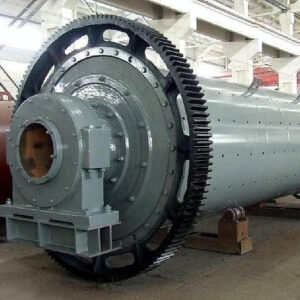
Ball Mill
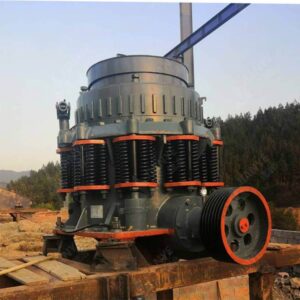
cone crusher
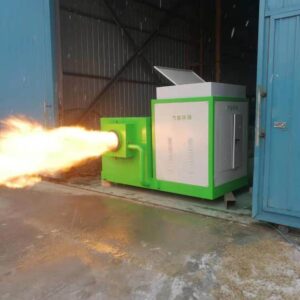
Hot Air Furnace
Get the best solution now!
WRITE TO US
Request A Free Quote
Send us a message if you have any questions or request a quote. Our experts will give you a reply within 24 hours and help you select the right activated carbon you want.
- [email protected]
- (86) 15036188923